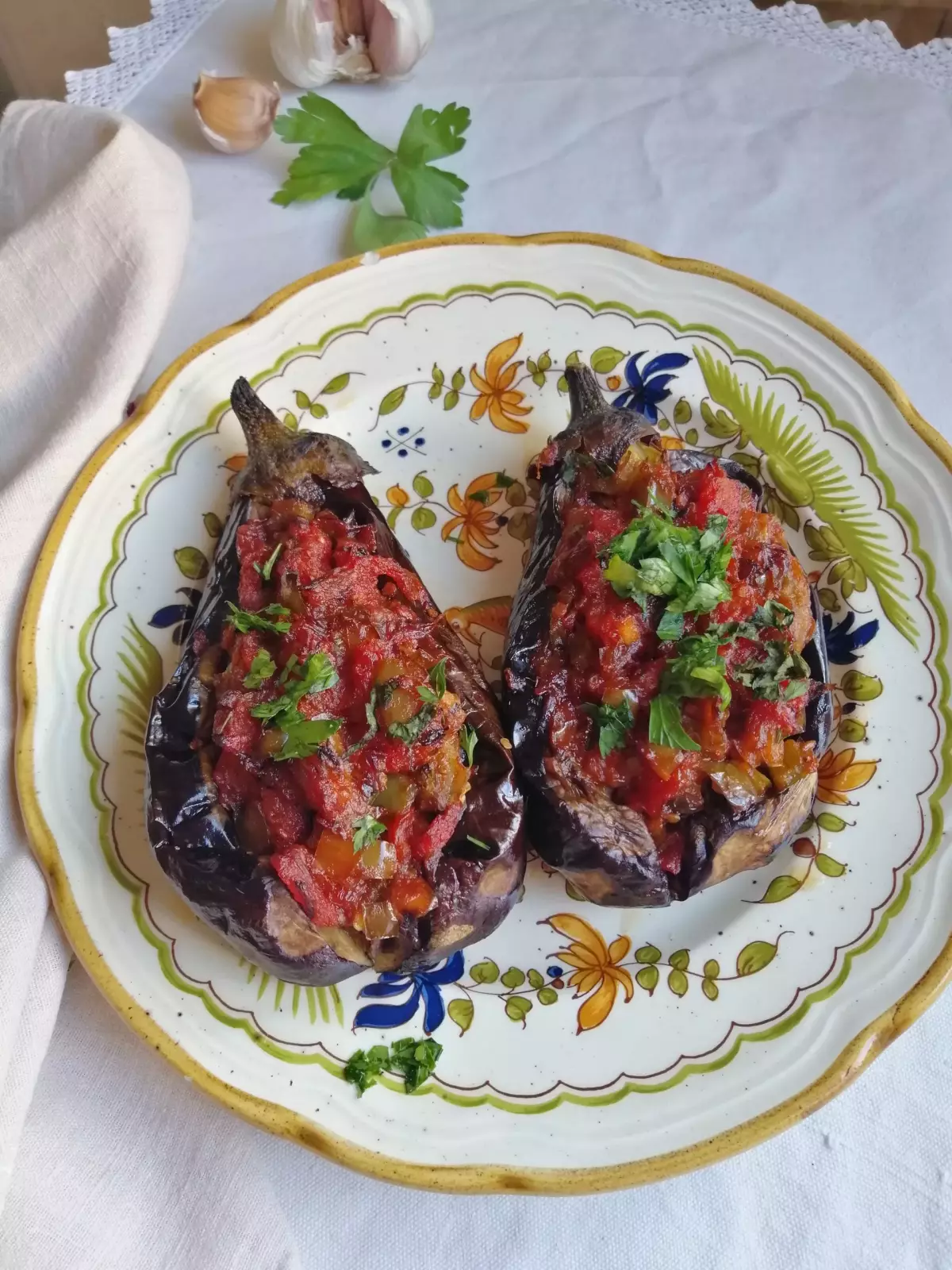
Aubergines (Eggplant)
Recipe from the book "The First Ukrainian Everyday Cookbook" (1-ша українська загально-практична кухня), 1929, by Olha Franko.
A Garden Novelty
In autumn, when the shelves in the shops bow under the weight of all manner of fruits and vegetables, we spot among the produce a dark purple, egg-shaped fruit called an aubergine, or in English, an egg-plant.
Some of our housewives eye them with suspicion. Only Ukrainian women from the central lands welcome their appearance with delight. It is mostly Italians and Bulgarians who sell them in their shops, as the plant is evidently widespread in their countries. I came across it in the Kyiv region and in Transcarpathia, and I saw it more than once in Vienna as well. Everywhere it goes by a different name.
I first became acquainted with this vegetable in Kyiv, at my aunt's home. Eager to learn about the local dishes, I often peeked into the kitchen — that impregnable fortress of the Muscovite cook, who addressed everyone with a familiar "you." Having won her favour, I gained permission not only to watch but also to take part in her "culinary wonders." It was then that I first laid eyes on those purple aubergines.
Baked in the oven and peeled, they were arranged in a bowl. My aunt herself would come to the kitchen to prepare the various appetisers — that is, to give them their final flavour and appearance — even though she trusted fully in the skill of her long-serving cook. Nevertheless, throwing a large apron over her fine dress, she would appear to make sure that everything was truly in order.
It went without saying that making the "false caviar" from the aubergines was her own duty, for that katsapka (a colloquial term for the Russian cook) was waiting for her to do it. In the meantime, the katsapka had finely chopped an onion and, having scooped out the grainy inner flesh — which truly resembled real caviar — began to chop it with a cleaver. All of this she placed in the bowl, and my aunt stirred it gently with a wooden spoon. Adding pepper, salt, and a dash of wine vinegar, she began to drizzle the mixture generously with good oil (one must know that aubergines require a great deal of oil). Having mixed everything thoroughly to taste, my aunt arranged the finished dish in a lovely salad bowl, decorated it with olives, and the appetiser "false caviar" was ready. That it was magnificent, I was convinced at the table, when the guests repeatedly helped themselves to it on their plates as an accompaniment to a pirohy or pirozhky, alongside the real black caviar.
And my mother would very often fry these aubergines in oil for us children, slicing them into thin rounds and dusting them with flour. While frying, the rounds seemed to drink up the oil, yet they tasted all the more wonderful for it.
In every country they are prepared differently. Not long ago I came across a recipe for how they are seasoned in Iran. Having tried it out, I share it here for the benefit of our housewives.
(Hanna Franko-Kliuchko, "Our Life", November 1959)

Ingredients
- 3 aubergines (eggplants)
- 1 red onion
- 1 green pepper
- 3 tomatoes
- 2 cloves of garlic
- fresh parsley
- salt, pepper, sugar
Preparation
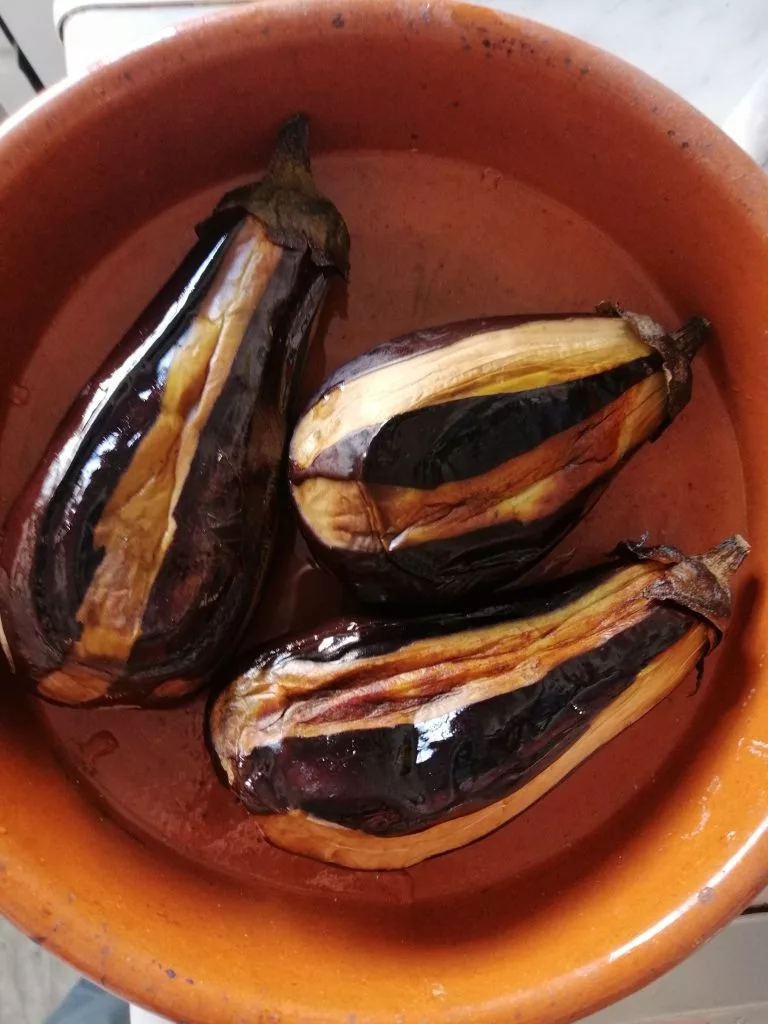
- Roast the aubergines in the oven at 220° for 20 minutes.
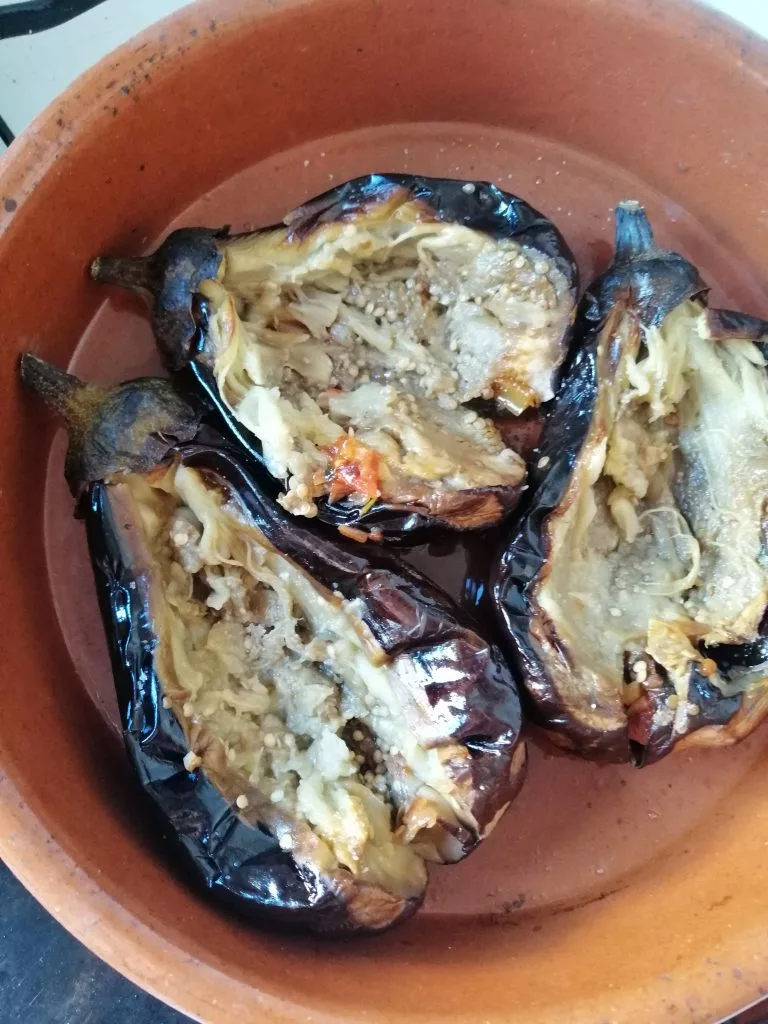
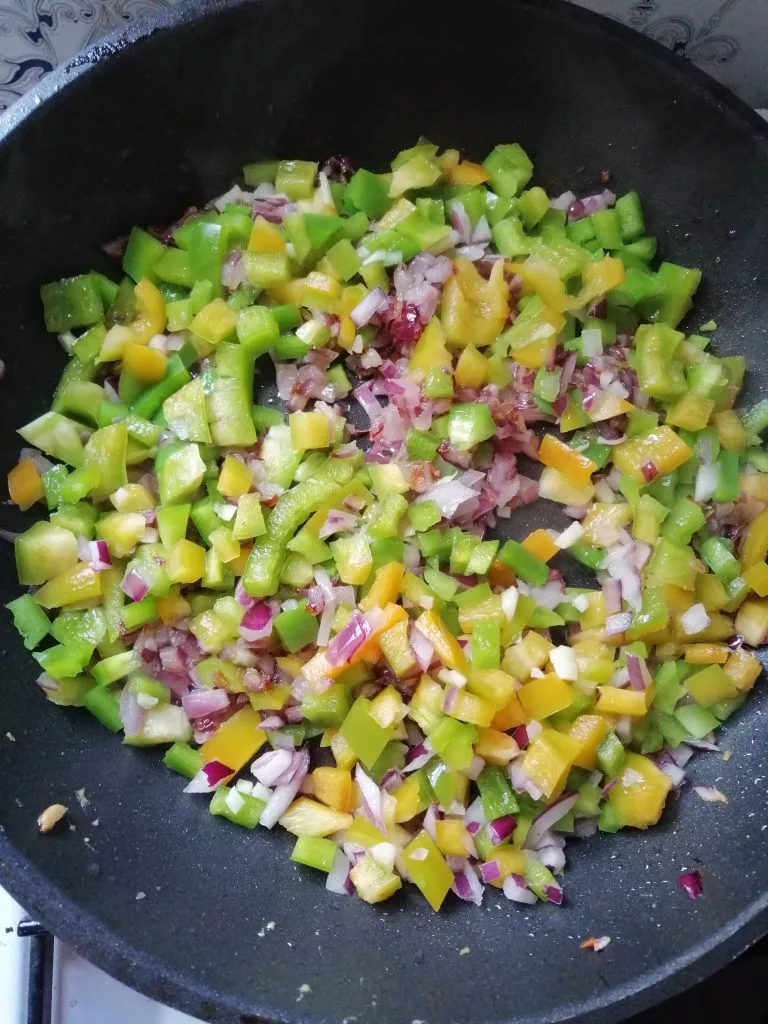
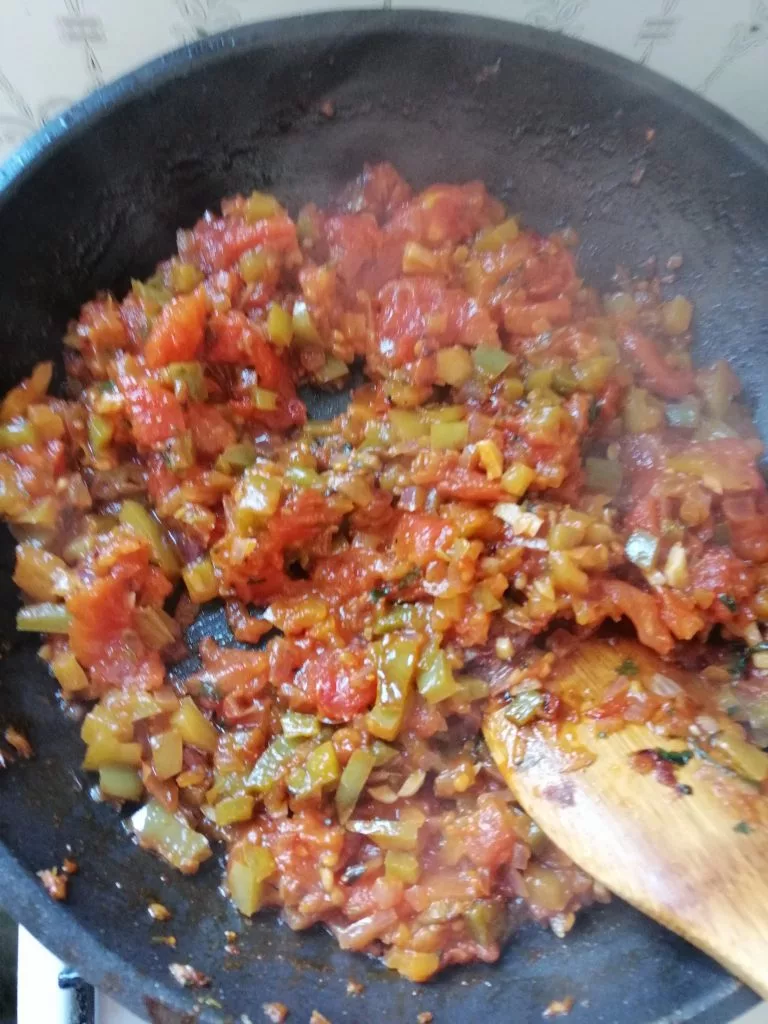
- Cut them in half lengthways, scoop out the flesh, and add the finely chopped onion, pepper, and garlic. Stir and sauté together.
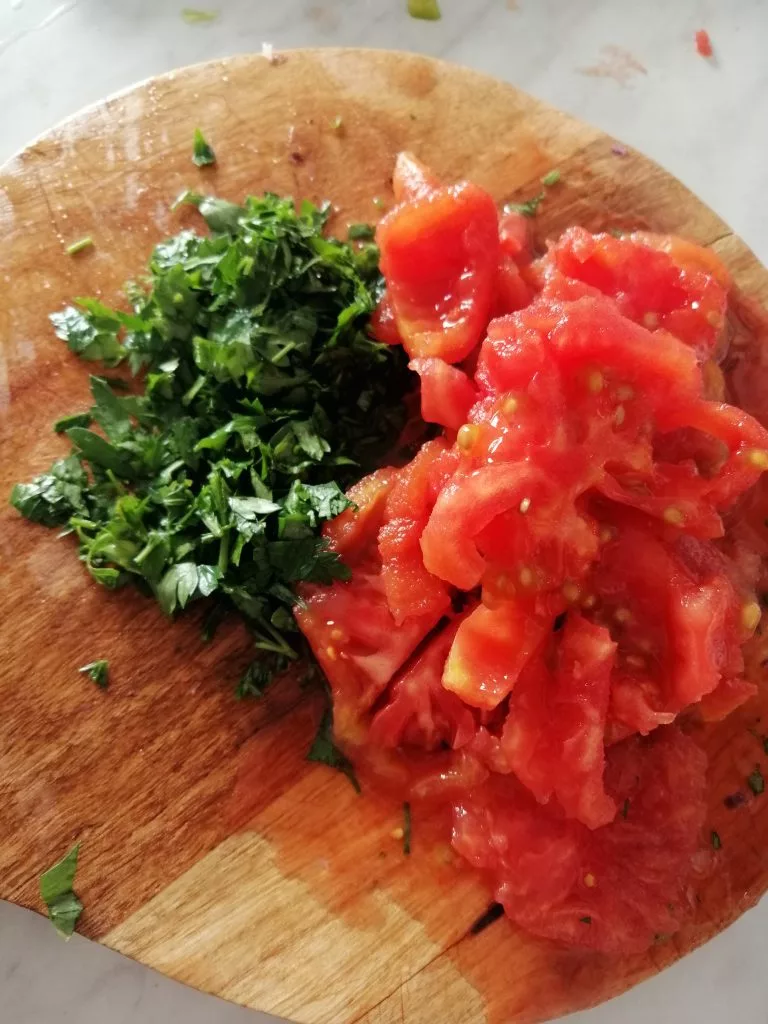
- Peel the tomatoes, chop them, add to the vegetables, and braise for a further 10 minutes.
- Add the chopped parsley, salt, pepper, and sugar to taste.
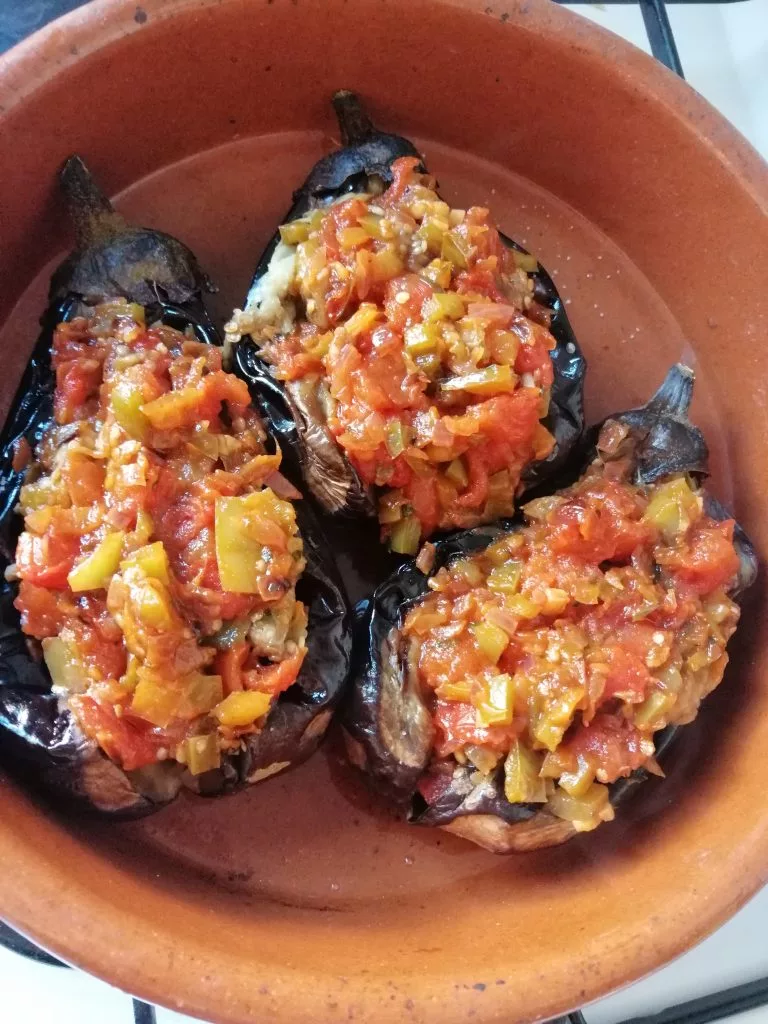
- Fill the aubergine halves with the prepared stuffing.
- Pour a little oil into a baking dish, arrange the aubergines in it, and bake at 220° for 40 minutes.