Quinces
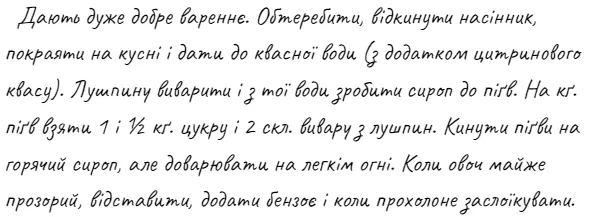
Recipe from the book "The First Ukrainian Everyday Cookbook" (1-ша українська загально-практична кухня), 1929, by Olha Franko.
The quince – known as pigva (піґва) or ayva (айва) in Ukrainian – is a fruit originating from Cydonia. For the Greeks, it was the tree of Aphrodite, and its fruits were considered the fruits of love. The Romans carried on this tradition, though Venus became its patron. At Roman weddings, it was customary to offer quince to the newlyweds as a symbol of happiness and fertility.
In the 4th century BC, the Roman writer and agronomist Palladius began cooking fruit cut into strips in honey, and it was not until the 7th century that recipes for quince juice and honey jelly first appeared. In the Middle Ages, this fruit was served at banquets as a sign of wealth and prosperity.
Quince marmalade also caught the attention of Nostradamus: in his book of confections, several recipes are recorded, with the note that it is precisely in the quince's skin that its fragrance resides, and that one should therefore not peel it.
In Spain, quince preserve is very popular and goes by the name "Membrillo."
Many different versions of these recipes have survived to our day, and what is remarkable is that after so many centuries, they have changed very little. Quince preserves keep well and have a high nutritional value.

Ingredients
- 1.5 kg quinces
- 1 kg sugar
- juice of one lemon
- 1 cup of water (you may use a decoction made from quince peelings)
Preparation
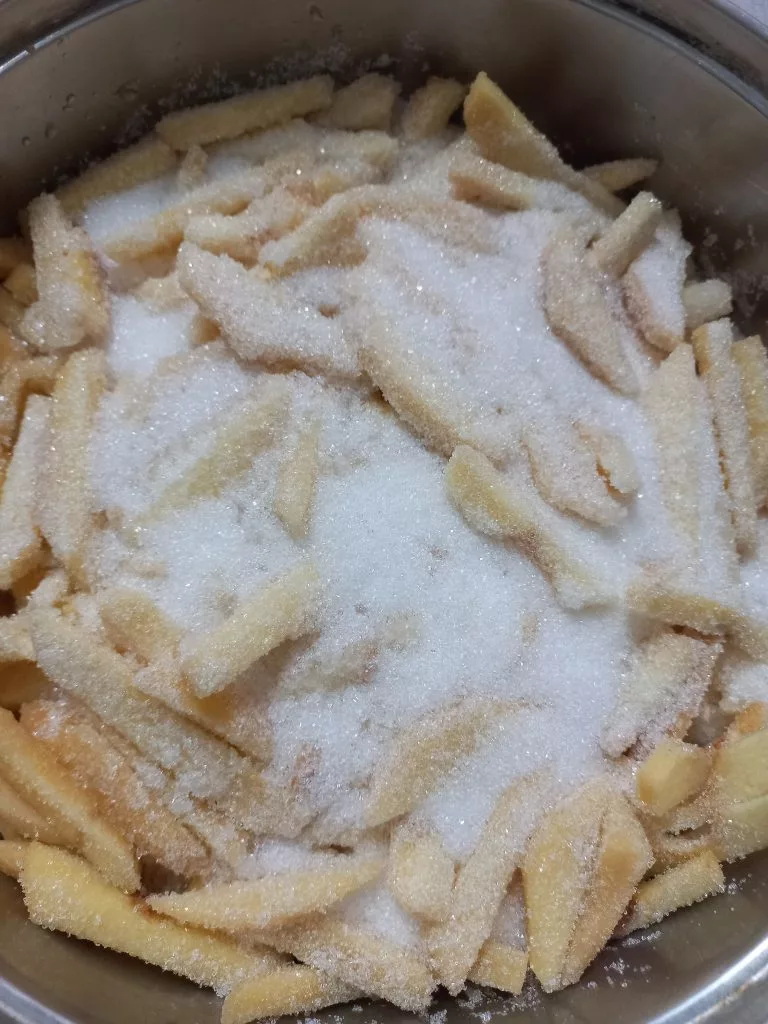
- Peel the quinces and cut them into pliastерky (thin slices).
- Sprinkle with sugar, add the water and lemon juice.
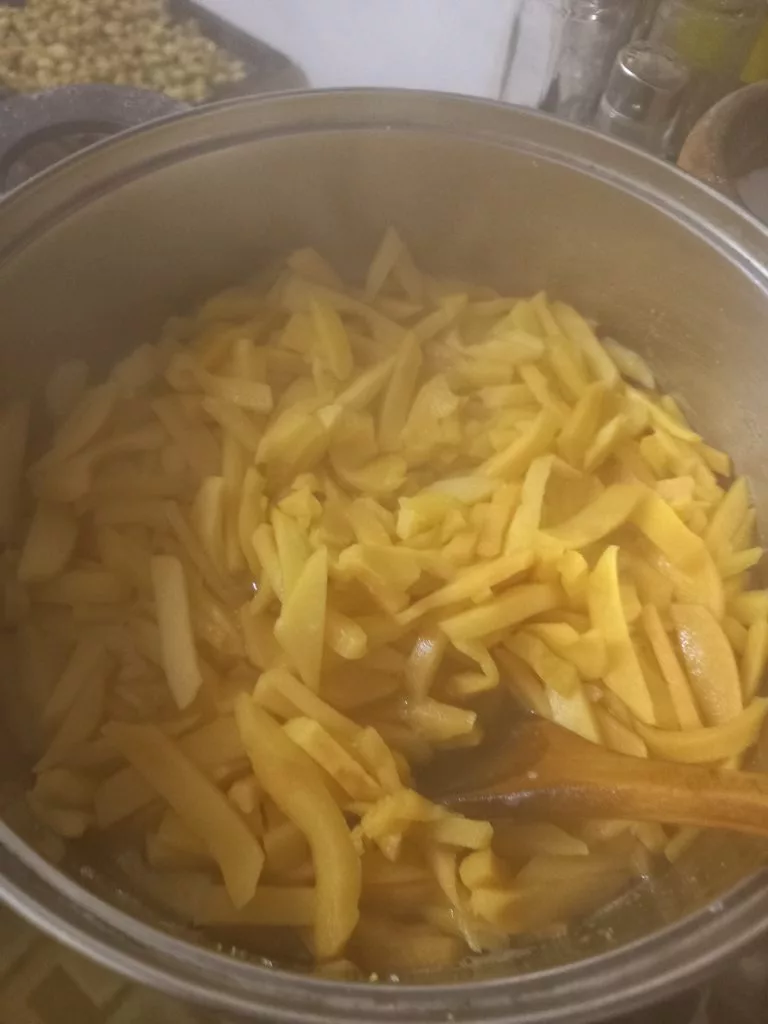
- Bring to a boil and simmer over low heat for 15 minutes.
- Remove from the heat and leave to rest for 3 hours.
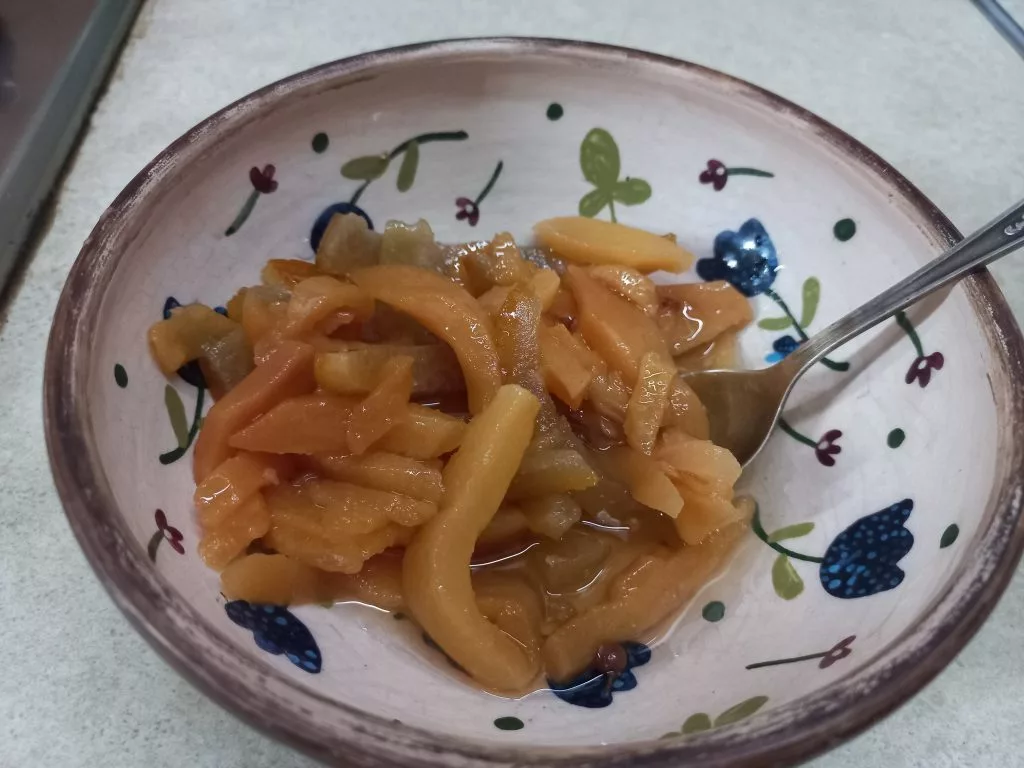
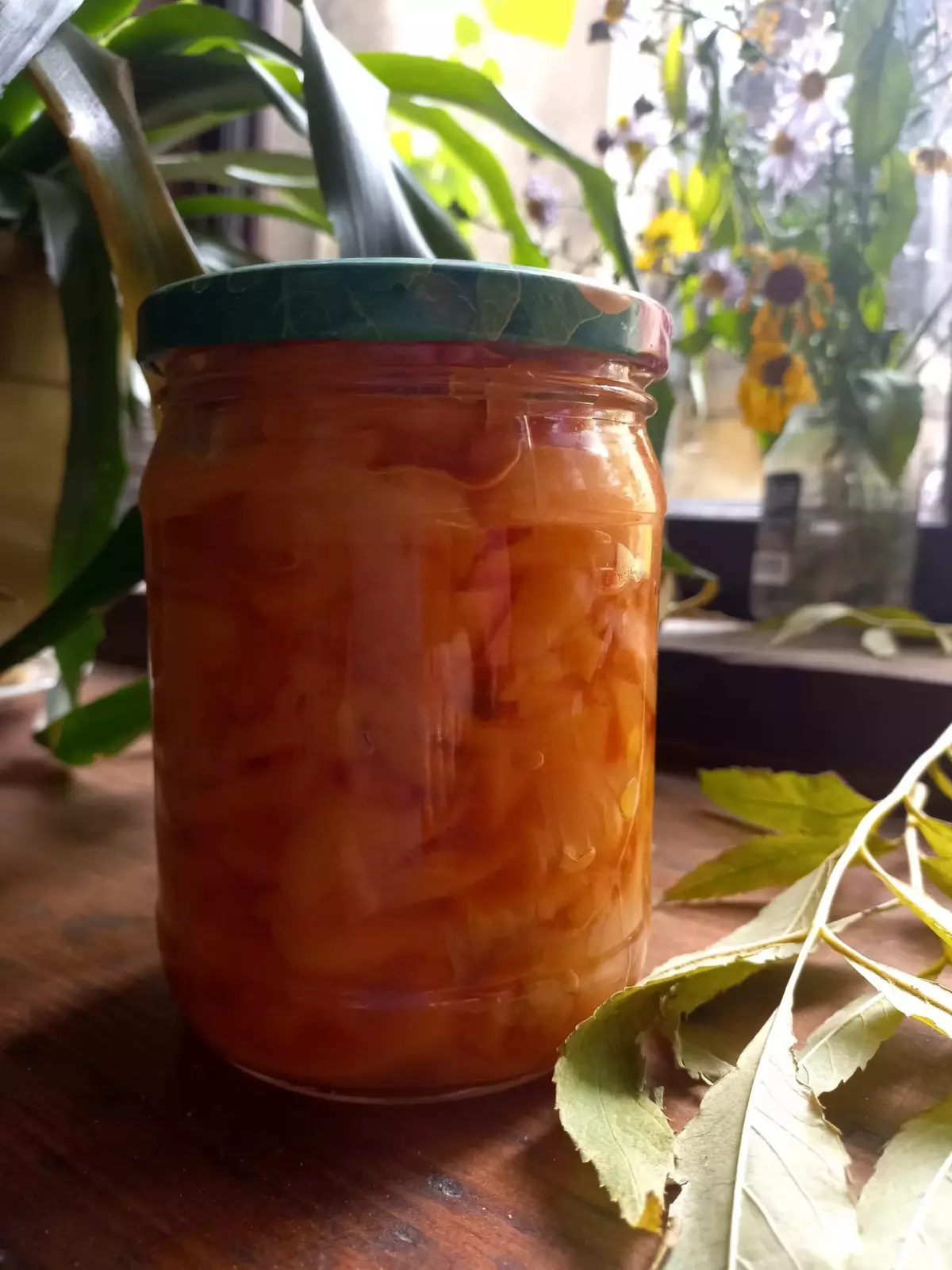
- Bring to a boil again for 15 minutes, then pour into sterilized jars.